

|
Quantity
|
Out of stock
|
||
|
|
|||
|
|
|||
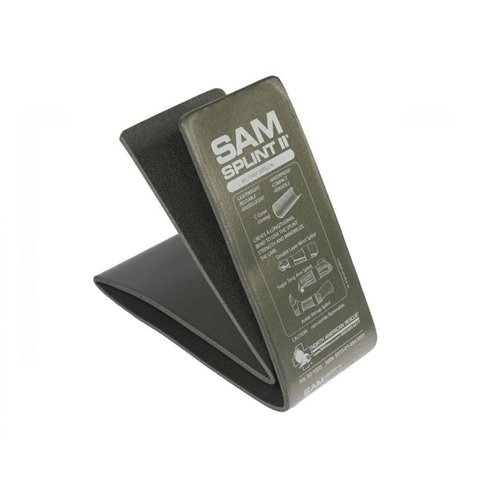
In combat conditions, medical splints allow rapid immobilization of an injured limb and help prevent worsening of the condition. They reduce pain, lower the risk of additional damage to tissues and blood vessels, and help prevent shock. They also facilitate transport, which is especially important in situations with limited time and complex logistics. Their compactness and functionality make them indispensable in tactical medicine.
Where They Are Used and Who They Are For
They are used by military medics, rescuers, combat personnel, and tactical medicine instructors. They are applied directly on the battlefield, during evacuation, and in field hospitals. They are also used in civilian medicine — emergency services, trauma centers, and outdoor activities. Immobilization splints are necessary wherever there is a risk of fractures or serious limb injuries. The most versatile are foldable flexible models, which are suitable for various injuries, lightweight, and compact, making them easy to carry in a first aid kit. In more complex cases, pelvic splints or traction splints are used.
Main Product Features

— Light weight and compact size, reliable immobilization without complex mechanisms, and compatibility with bandaging materials.
— Universal models for different types of fractures are made of durable materials that withstand load and are resistant to moisture and temperature changes.

— High-quality tactical splints do not need to be removed for X-ray imaging. This is critically important to avoid unnecessary disturbance of the fractured limb in the hospital.
— Customizability — the splint can be cut with regular scissors (for example, to create a finger splint) and shaped into any form according to the patient’s anatomical features.

— The design of a modern tactical splint is a “sandwich” structure consisting of a thin layer of aluminum covered with soft foam. In its resting state, it is flexible, but when bent (into a channel or angle shape), it becomes extremely rigid.
— It can be reused after cleaning.
Compliance with Tactical Medicine Standards
Medical splints used in tactical medicine are tested for strength, environmental resistance, and compliance with TCCC (Tactical Combat Casualty Care) principles. They must allow rapid application and effective immobilization for safe patient transport. Materials must be hypoallergenic and maintain their shape and functionality even after prolonged use.
What to Consider When Choosing
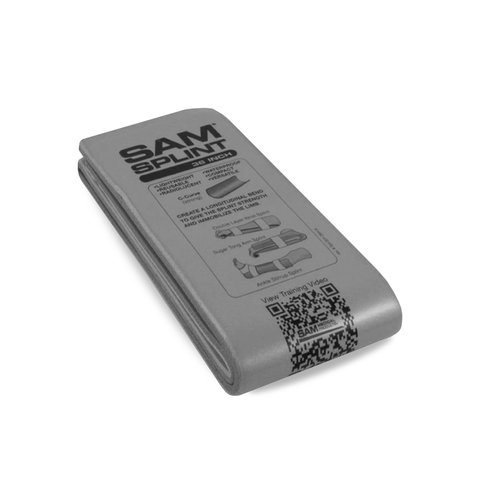
It is important that the splint is suitable for different types of injuries, resistant to environmental conditions, and can be applied quickly without additional tools. It should be lightweight, compact, and compatible with other equipment. The most common and versatile size is 36 inches (91 cm), which is sufficient to immobilize a leg or both arms. For tactical use, subdued colors (olive, coyote, gray) are preferred, while the inner side is often bright (orange) for civilian rescuers to help quickly identify injuries.
Questions and Answers
What is the difference between a splint and a cast?
A splint does not create rigid circumferential pressure, which helps avoid complications from swelling after injury.
How long can it be used?
Until professional medical care is provided.
When is it used?
In cases of suspected fracture or serious injury.